

Documentation Index
Fetch the complete documentation index at: https://docs.authsignal.com/llms.txt
Use this file to discover all available pages before exploring further.
Adaptive MFA uses rules to intelligently determine when to challenge users based on risk factors and context. Instead of challenging every user every time, you can create policies that balance security with user experience.
How adaptive MFA works
Rules evaluate contextual information about each action to determine the appropriate response:
Common adaptive MFA scenarios
New device detection
Challenge users only when they’re signing in from an unrecognized device:
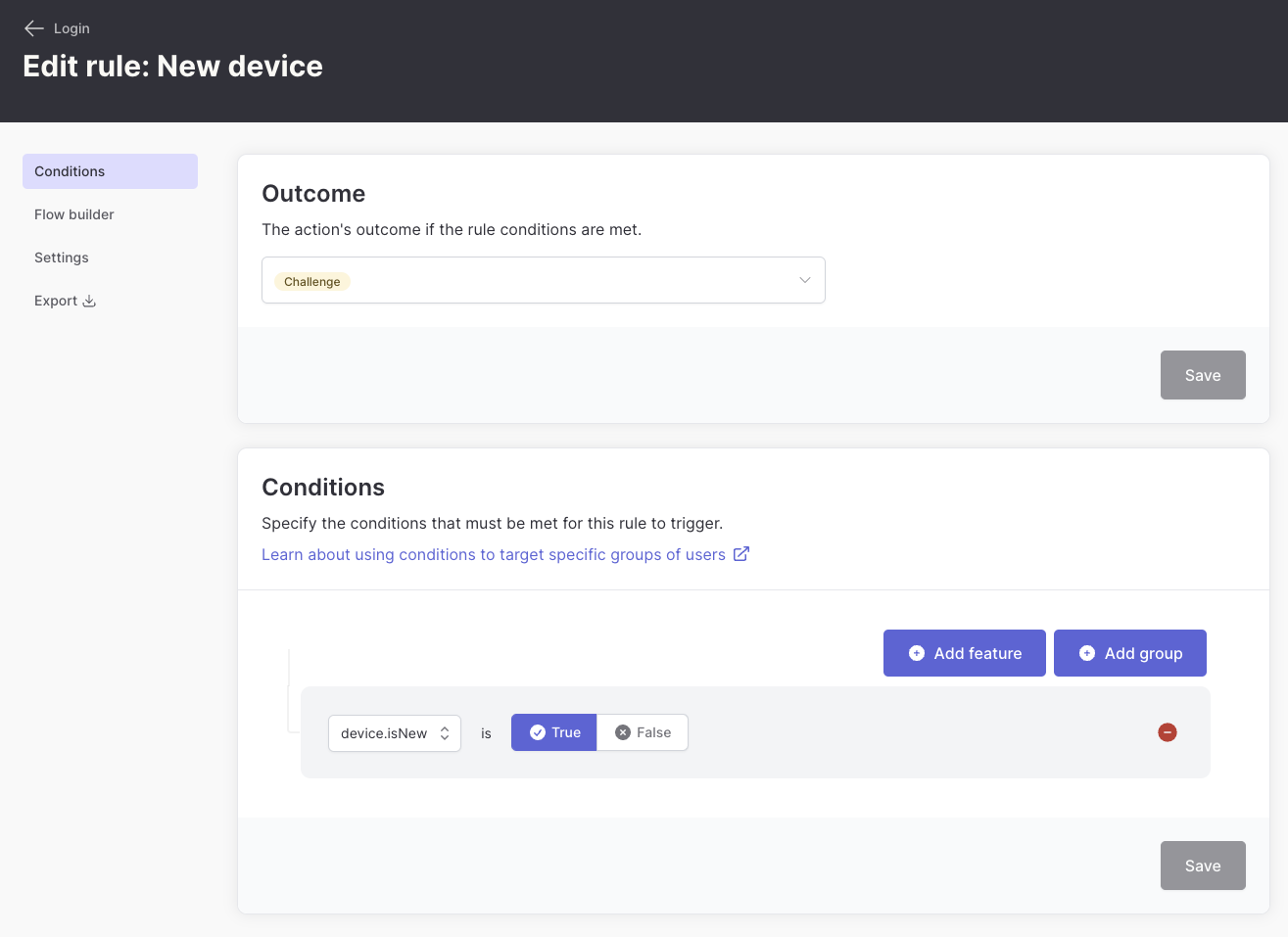
Implementation:
const result = await authsignal.track({
userId: "0272c312-e181-4cad-a494-43647b503a0a",
action: "signIn",
attributes: {
deviceId: "555c17e1-3837-4f13-81bb-131e5597e168", // Required for device tracking
userAgent: req.headers['user-agent'],
ipAddress: "203.0.113.42"
}
});
Location-based policies
Apply different authentication requirements based on user location:
- Known locations: Allow without challenge
- New countries: Require MFA
- High-risk regions: Block or require strong authentication
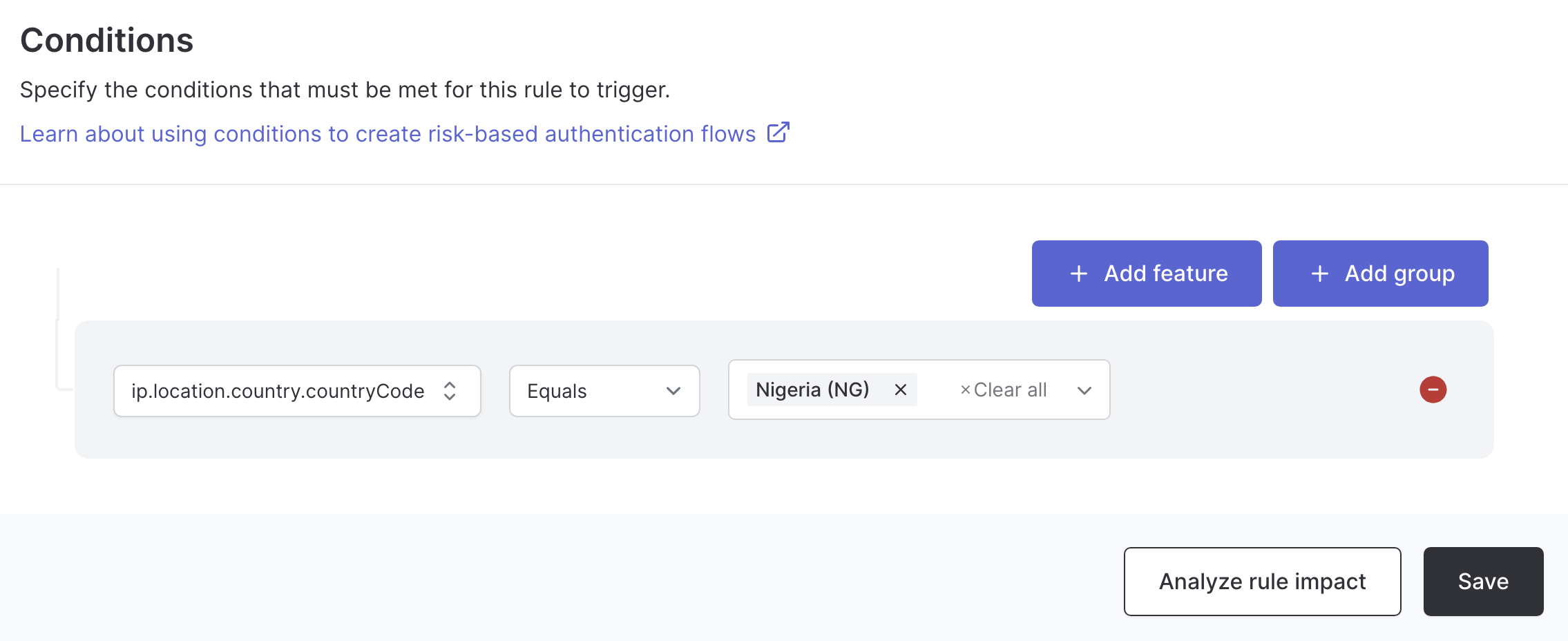
Implementation:
const result = await authsignal.track({
userId: "0272c312-e181-4cad-a494-43647b503a0a",
action: "signIn",
attributes: {
ipAddress: "192.168.1.100", // Required for location detection
userAgent: req.headers['user-agent'],
}
});
Risk-based authentication
Create rules that consider multiple risk factors:
- User behavior: Login patterns, time of day, frequency
- Device characteristics: Known vs unknown devices, device type
- Network information: IP reputation, VPN detection
- Transaction context: Amount, recipient, frequency
Business-specific adaptive MFA
You can create rules based on your application’s specific data points. For example, challenge users only for high-value transactions:
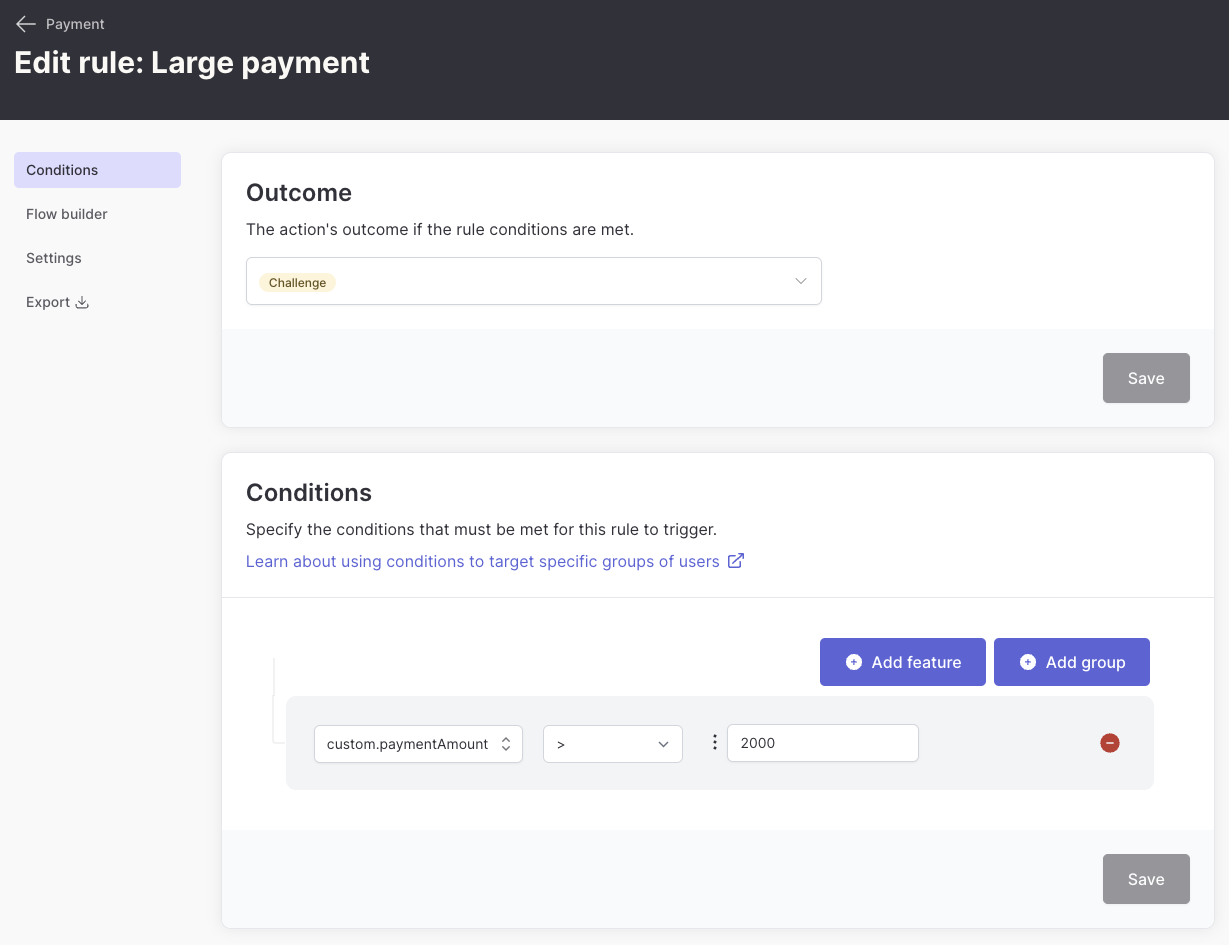
Implementation:
const result = await authsignal.track({
userId: "0272c312-e181-4cad-a494-43647b503a0a",
action: "payment",
attributes: {
redirectUrl: "https://yourapp.com/callback",
custom: {
paymentAmount: 1000,
},
},
});
const url = result.url;
Learn more about creating and using business-specific data in rules with custom data points.
Rule examples
Device and location combination
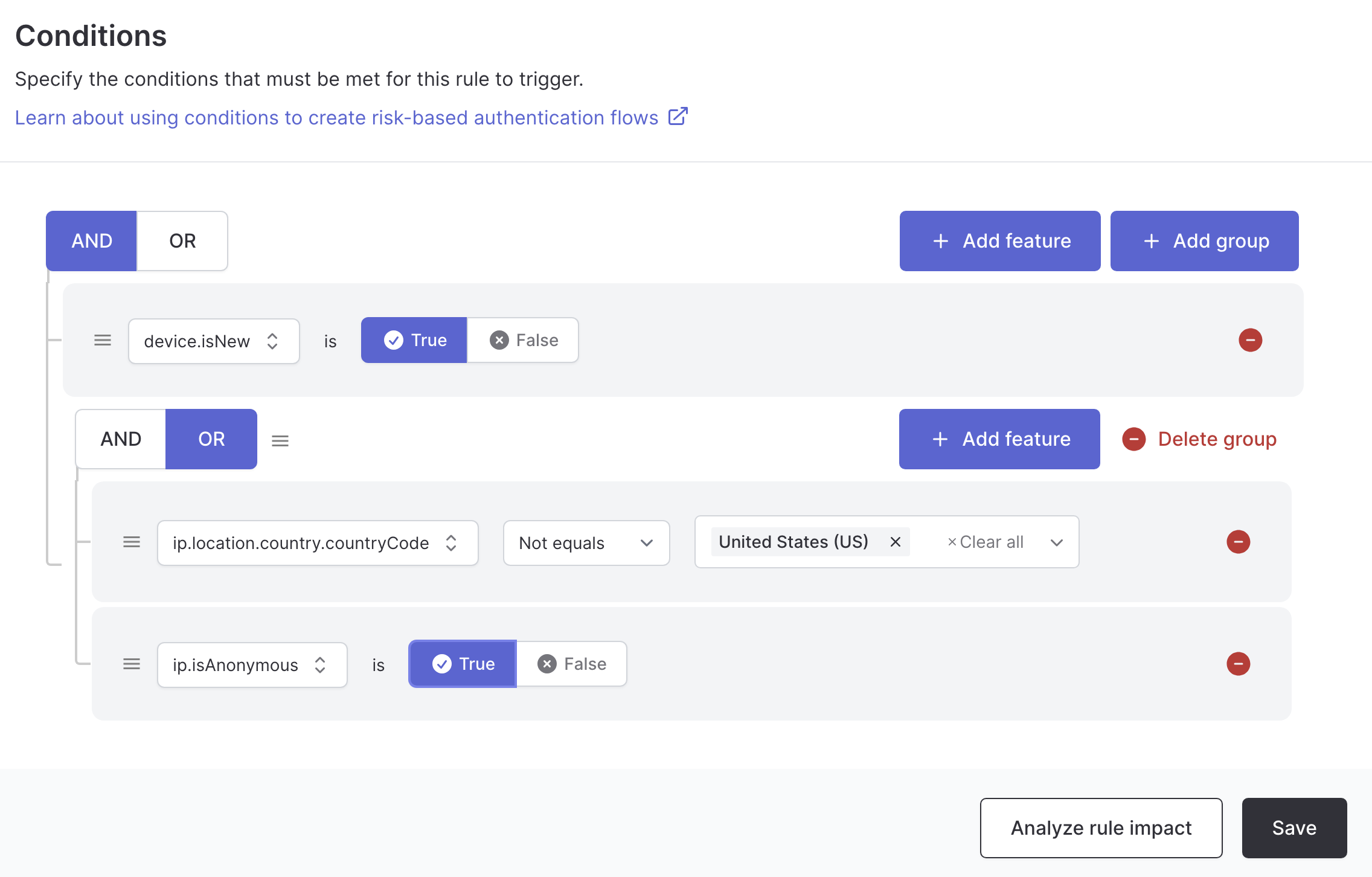
Device is new AND (IP country is not United States OR VPN detected is true)
Implementation:
const result = await authsignal.track({
userId: "0272c312-e181-4cad-a494-43647b503a0a",
action: "signIn",
attributes: {
deviceId: "555c17e1-3837-4f13-81bb-131e5597e168", // Required for device tracking
ipAddress: "198.51.100.25", // Required for location and VPN detection
userAgent: req.headers['user-agent']
}
});
Transaction pattern analysis using custom data points
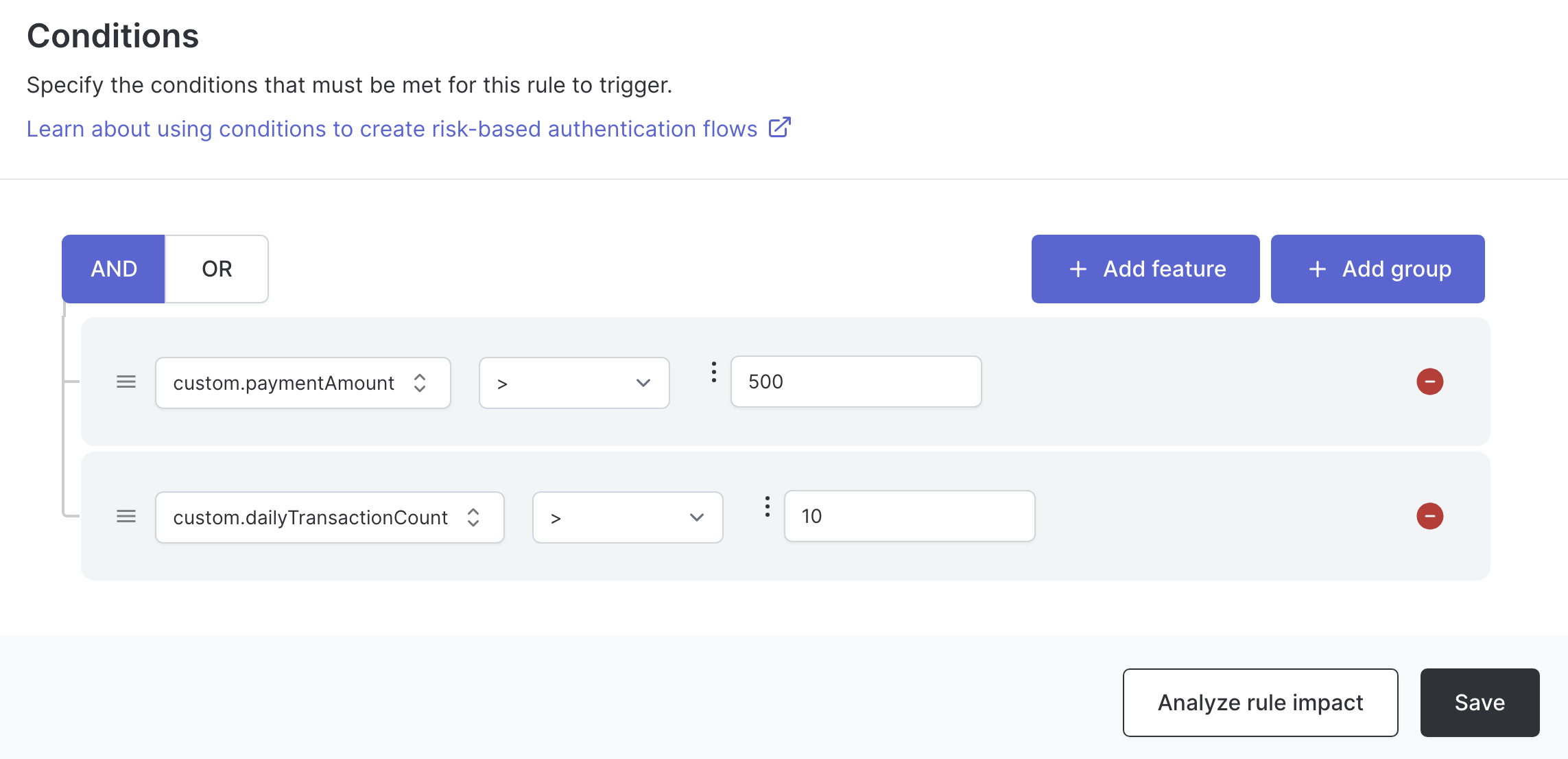
Payment amount is greater than 500 AND
(daily transaction count is greater than 10)
Implementation:
const result = await authsignal.track({
userId: "0272c312-e181-4cad-a494-43647b503a0a",
action: "payment",
attributes: {
custom: {
paymentAmount: transactionAmount,
dailyTransactionCount: userDailyCount
},
deviceId: "555c17e1-3837-4f13-81bb-131e5597e168",
ipAddress: "203.0.113.89"
}
});